
 Pусский
 中文
中文


-
Share:
Contact us
Inquiry
-
E-mail:info@xfjdmc.comWhatsApp:+8618871097635
Multi-roll tension leveler
At Jiade we have many models of multi-roll Tension Leveler
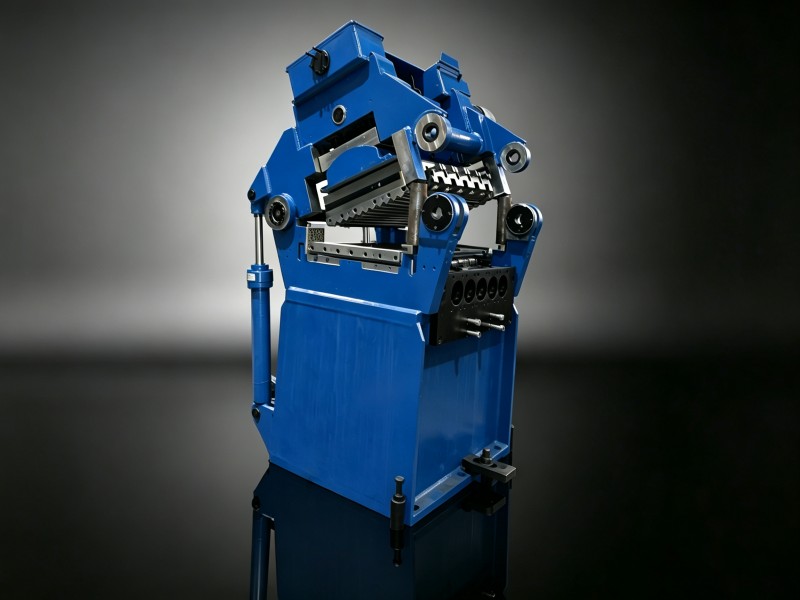
Why you need Jiade 15-roll, 19-roll, and 23-roll multi-roll Levelers?
1. Core Concept: Why More Rolls?
The number of rolls determines the density of bending cycles.
· More Rolls = Smaller Pitch (distance between rolls).
· Smaller Pitch = Smaller Bending Radius.
· Result: For ultra-thin or ultra-high-strength steel (UHSS), a smaller bending radius is required to generate enough plastic deformation to eliminate internal stresses without breaking the strip.
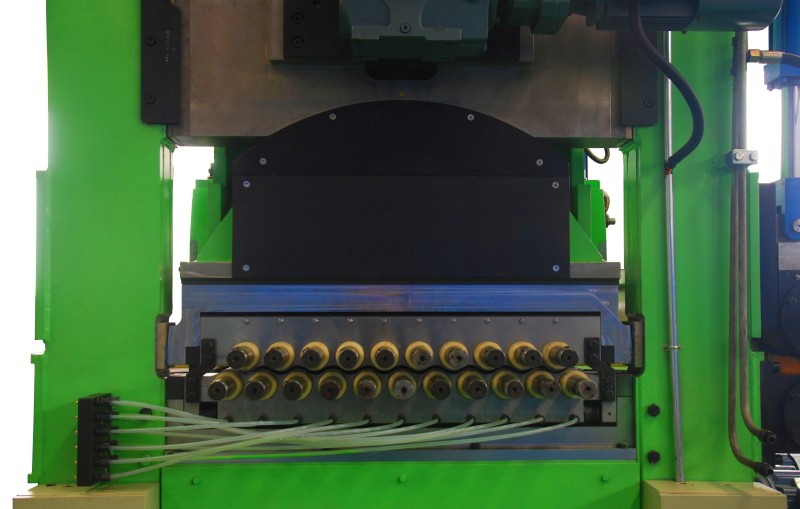
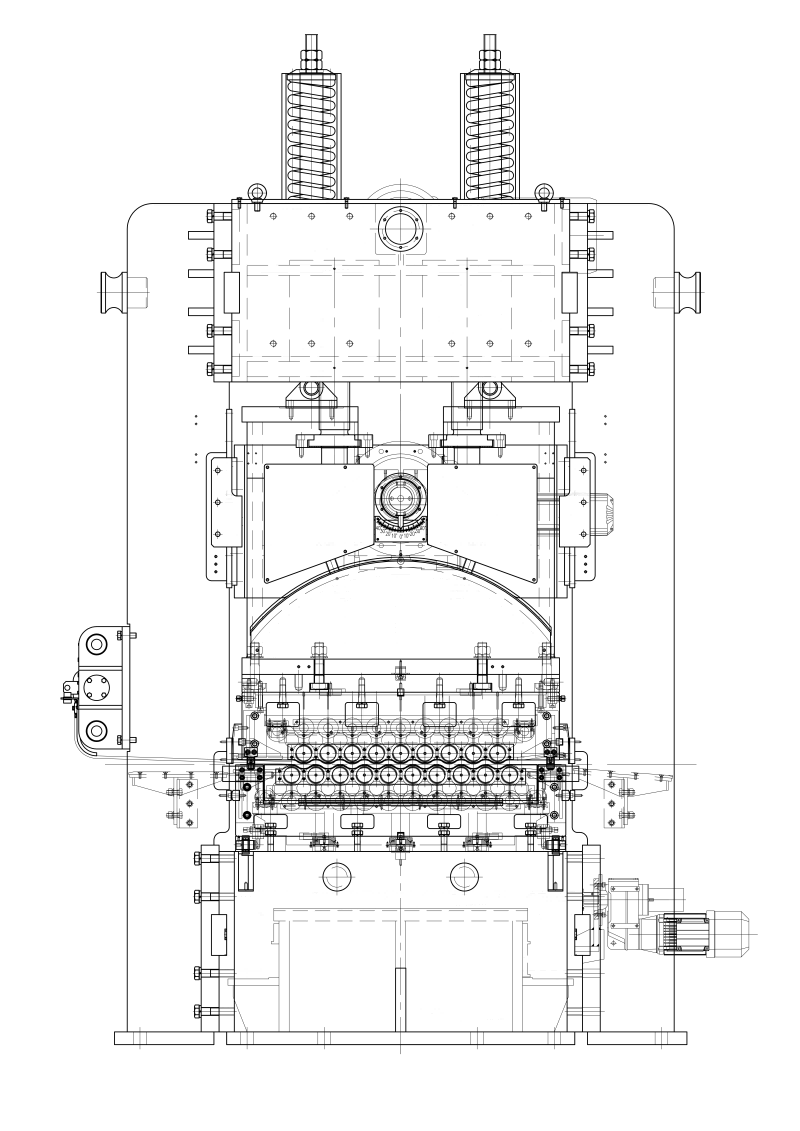
2. Comparison Table
| Configuration | Typical Strip Thickness | Target Material | Key Characteristics |
|---|---|---|---|
| 15-Roll Leveler | Thicker Gauges (e.g., 1.0mm – 6.0mm+) | Structural Steel, General Carbon Steel | Cost-Effective. Provides sufficient correction for standard flatness. Less effective for severe shape defects or thin stock. |
| 19-Roll Leveler | Medium-Thin Gauges (e.g., 0.4mm – 2.0mm) | Automotive Exposed Panels, Appliance Steel, High-Strength Steel (AHSS) | The Industry Standard. The best balance between precision and cost. Effectively handles complex shapes like edge wave and center buckle. |
| 23-Roll Leveler | Ultra-Thin Gauges (e.g., < 0.3mm) | Precision Electronics, Optical Substrates, Stainless Steel Foil | Maximum Precision. Designed for materials with extreme springback. Provides dense support to prevent strip wrinkling or tearing. |
3. Detailed Analysis
15-Roll Leveler
· Function: This is a robust workhorse configuration. It uses larger diameter rolls with a wider pitch.
· Pros: Lower power consumption, easier maintenance, and lower initial investment.
· Cons: Cannot handle very thin or hard materials effectively; the large bending radius may not be enough to penetrate the neutral layer of high-strength steel.
· Application: Rough leveling, structural beams, or entry sections of pickling lines.
19-Roll Leveler
· Function: The most versatile configuration in modern steel plants. The increased roll density allows for finer control over the strip's longitudinal profile.
· Pros: Excellent flatness accuracy (often meeting automotive standards). Can process a wide range of strengths (up to 1200-1500 MPa).
· Cons: Higher maintenance than 15-roll due to more components.
· Application: Automotive Outer Panels, Home Appliances (Refrigerators/Washing Machines), and General Galvanizing Lines.
23-Roll Leveler
· Function: A specialized precision tool. It uses small diameter rolls with a very tight pitch.
· Pros: Superior ability to eliminate micro-waves and residual stress in materials that are prone to snaking (side camber). Prevents "orange peel" surface defects.
· Cons: Very sensitive to setup errors. Requires high-precision bearings and cooling systems. Higher drive power required.
· Application: Electronic Components, Precision Stamping, Silicon Steel, and Thin-Gauge Stainless Steel.
4. Selection Guide
| Selection Factor | Recommendation |
|---|---|
| Material Thickness | Follow the rule: Thinner = More Rolls. Thin strips require dense support to avoid collapsing between rolls. |
| Material Yield Strength | For UHSS (>1000 MPa), add approximately 4–6 more rolls compared to mild steel of the same thickness to overcome springback. |
| Surface Quality | If the product is "Exposed Quality" (visible on cars), prefer 19-roll or 23-roll to ensure no residual roller marks. |
| Cost Efficiency | Do not over-specify. If a 15-roll meets your flatness tolerance (e.g., < 5 I-Unit), do not buy a 23-roll machine, as it will increase operating costs by 20%. |
Summary
· Choose 15-Roll for Strength and Economy (thick/soft steel).
· Choose 19-Roll for Versatility and Quality (automotive/general industry).
· Choose 23-Roll for Precision and Difficulty (thin/hard steel).
- Previous page: 23-Roll tension leveler
- Next page: 23-roll tension leveling line


